Interior BZDJ166
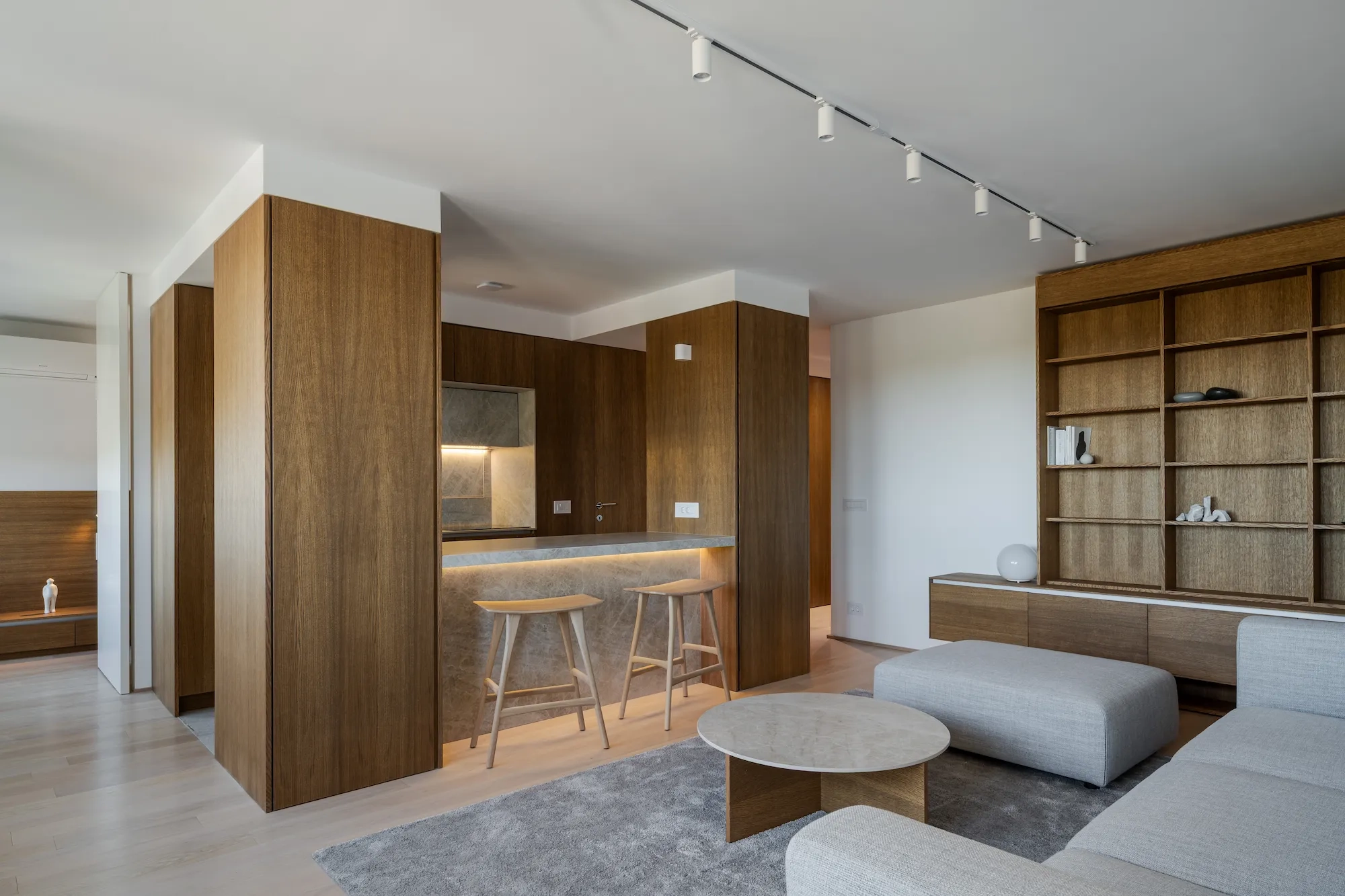
The interior design of the apartment begins with a transformation of the existing reality. Instead of the static layout typical of contemporary housing, the space is reorganized as a dynamic system of relationships, movement, and views. The interior does not treat space as a collection of separate rooms, but as a continuous field activated by use. By freeing the existing axes of movement, a completely new spatial experience is created, maximizing the potential of the context.
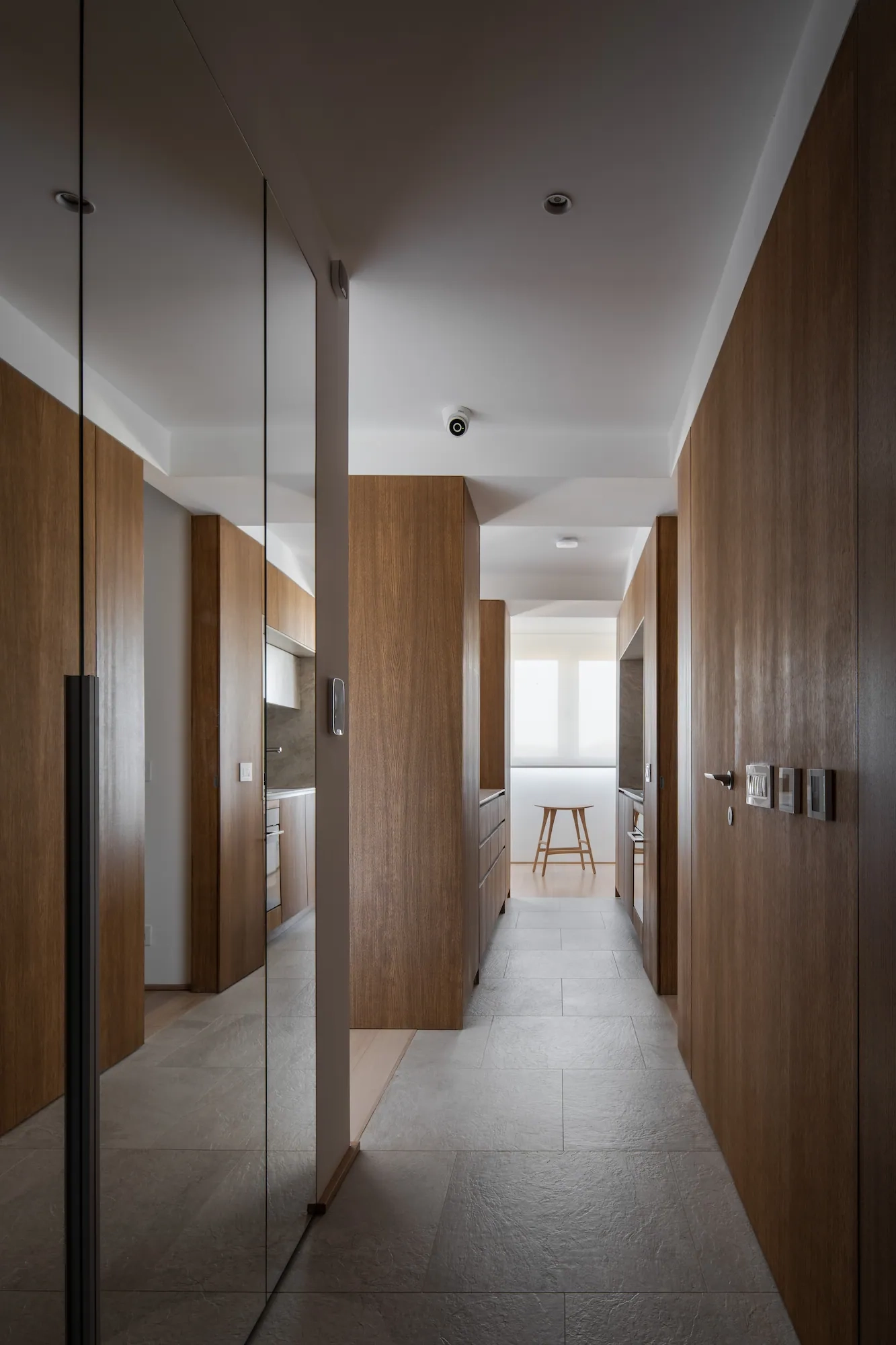
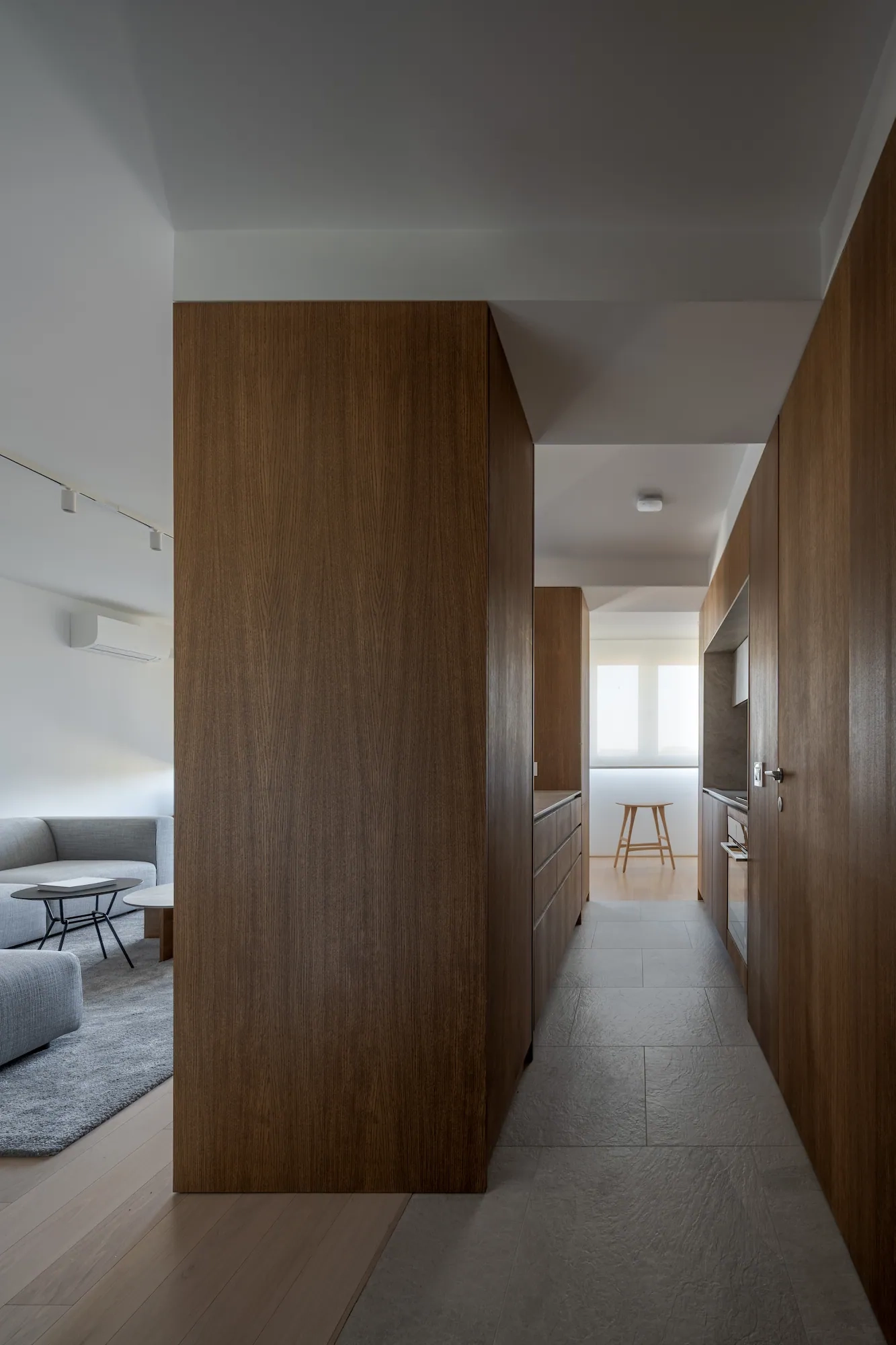
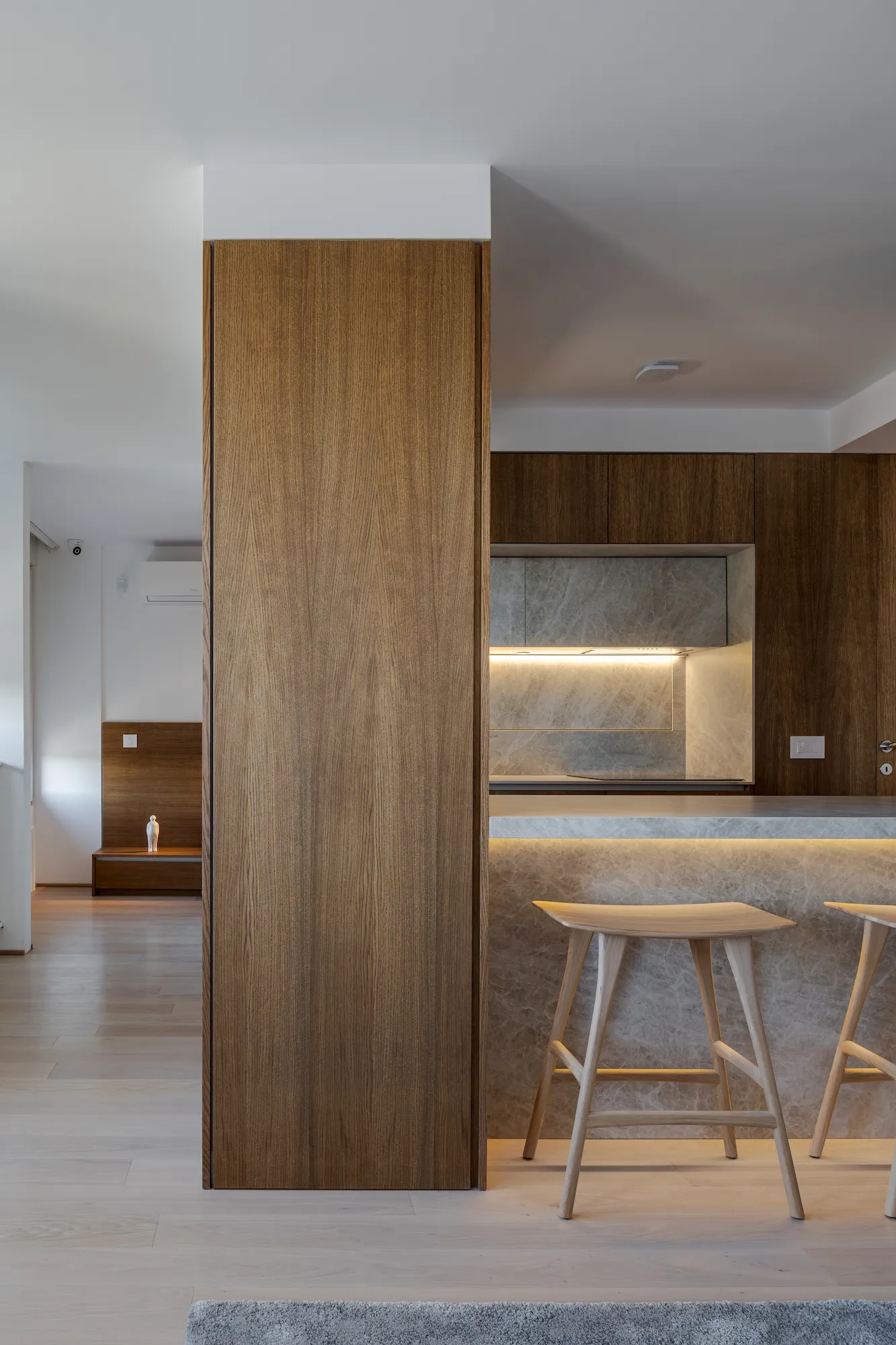
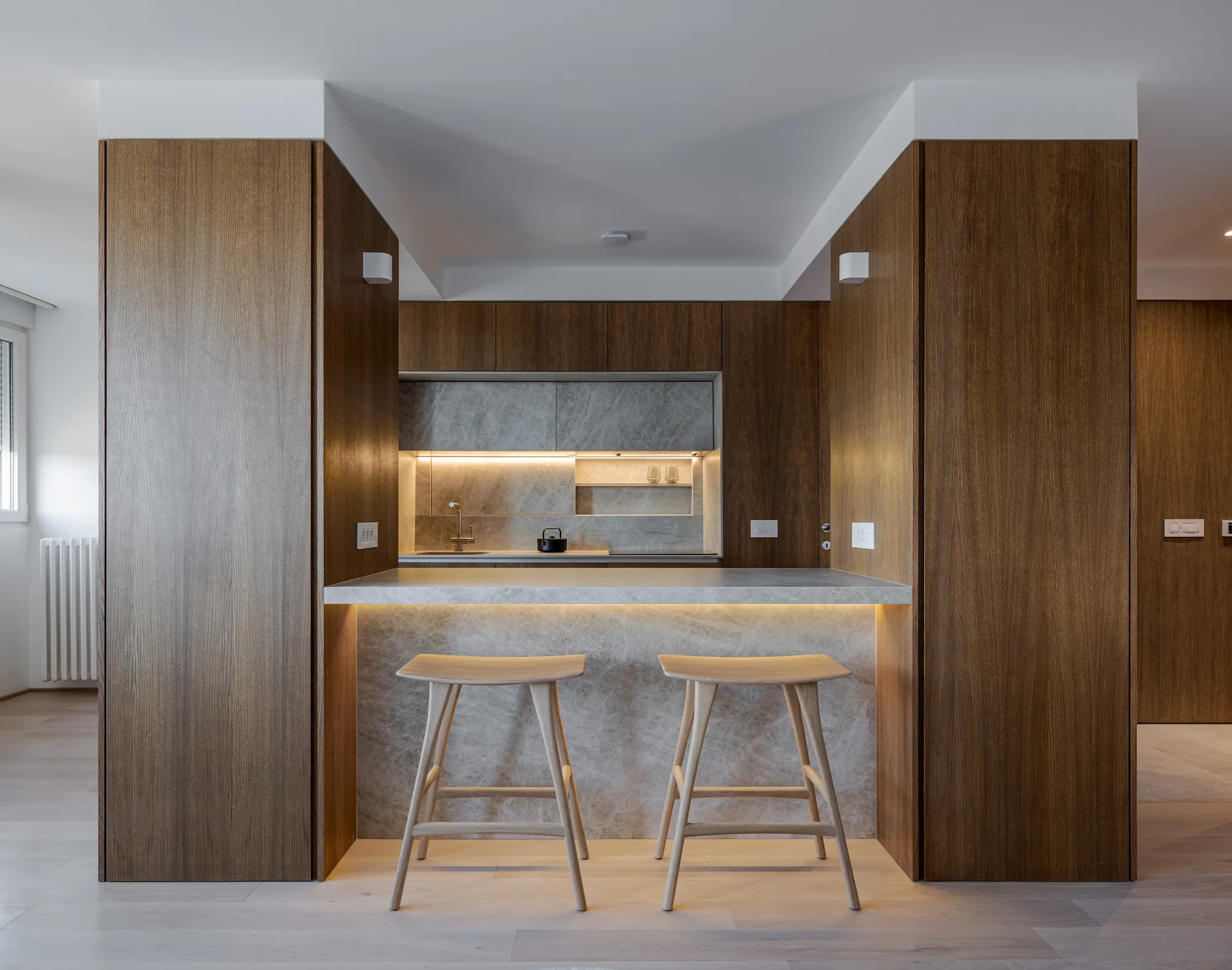
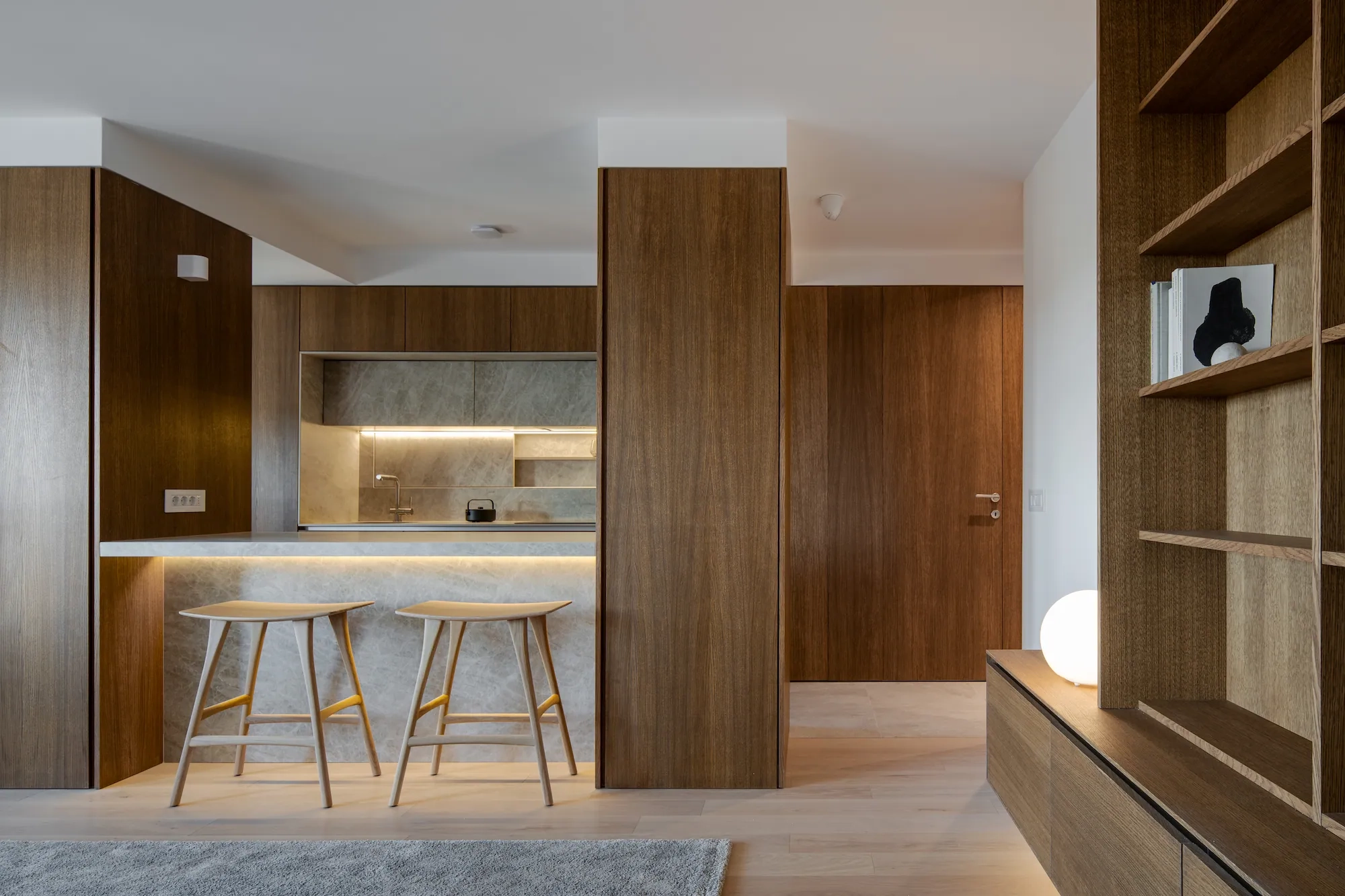
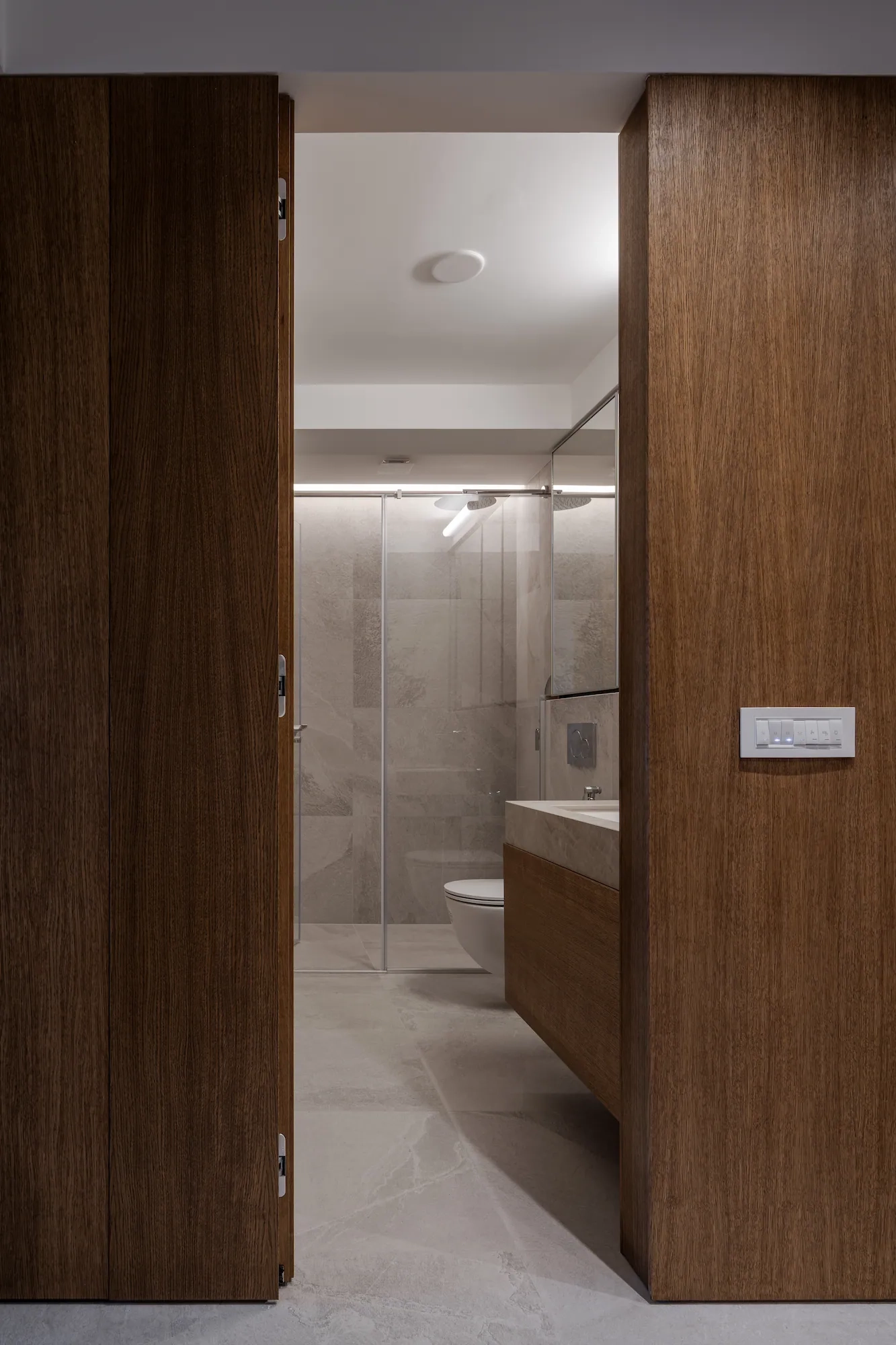
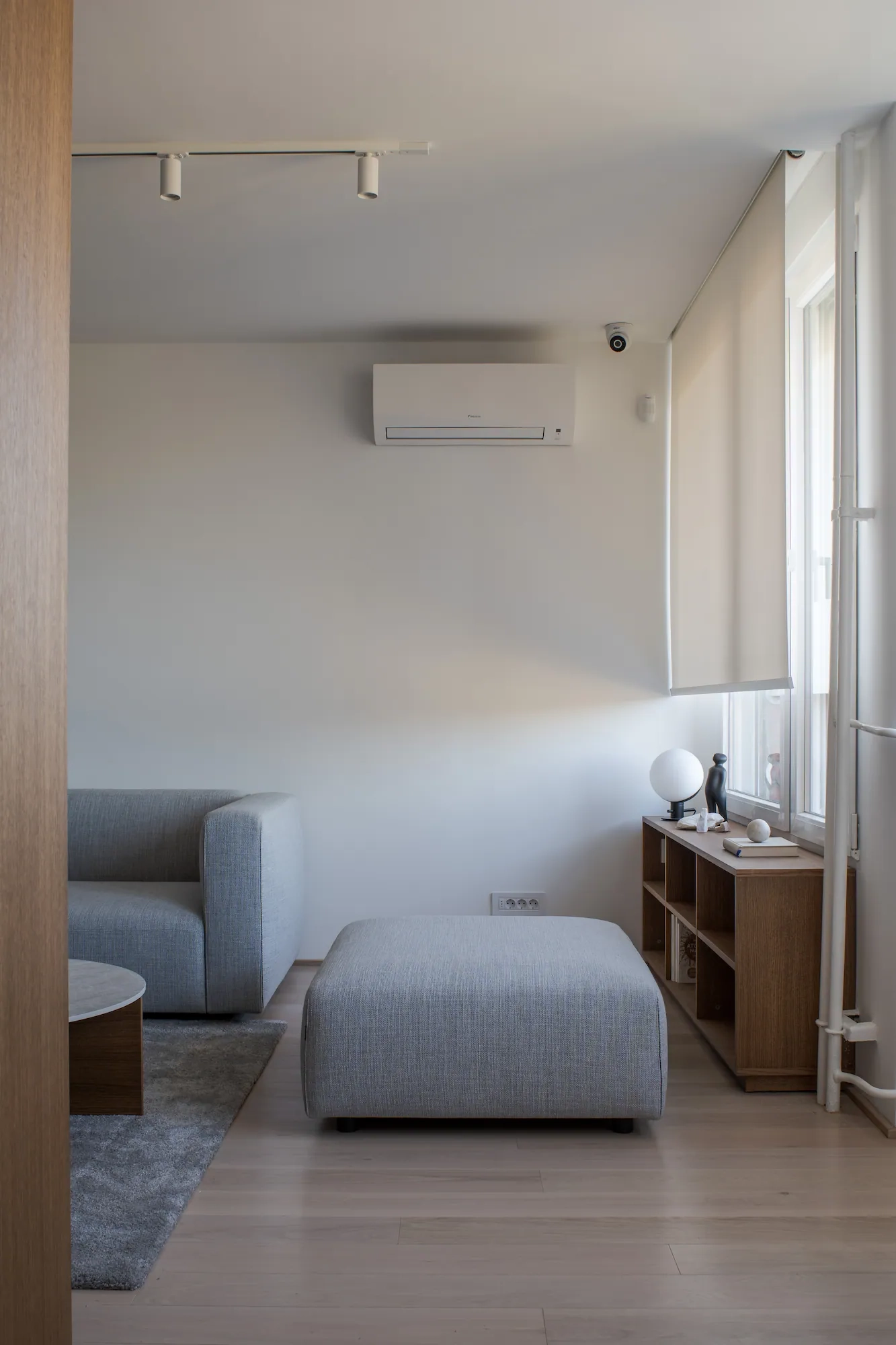
A central, compact wooden volume integrates the kitchen, storage, and technical functions, becoming a spatial anchor around which everyday life revolves. It does not divide the apartment; it drives it: movement unfolds along primary axes and circulates around the core, with the space framing itself. A series of openings, passages, and sightlines forms sequences of perspectives, light, and intimacy, allowing the interior to be continuously rediscovered.
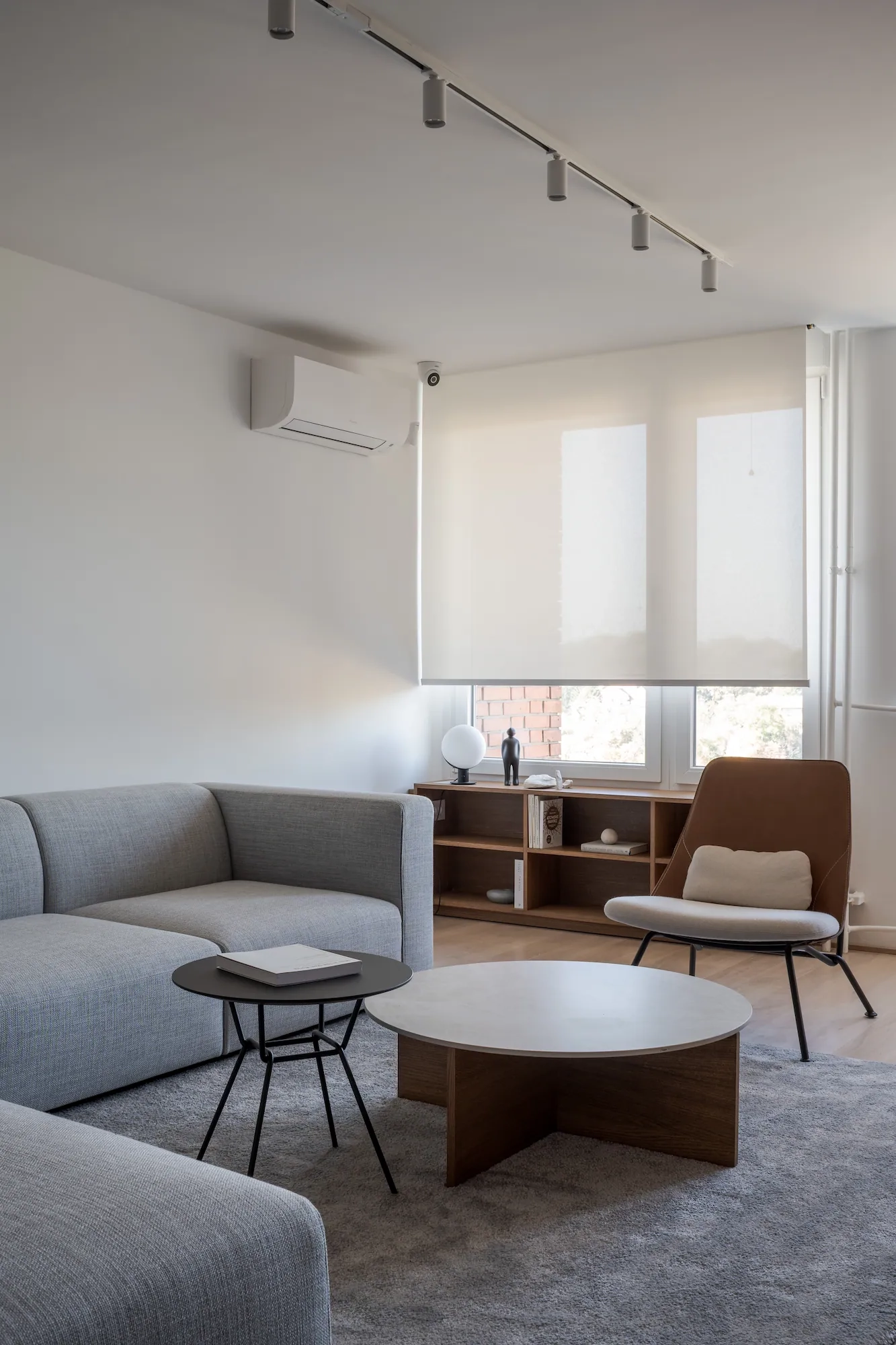
The idea of a free facade adds an additional layer to this spatial strategy. Tall pivot doors, stretching from floor to ceiling, open the perimeter of the apartment and erase the boundary between interior and exterior, allowing flexibility in use and continuity of light. Roller blinds further transform the character of the space—both formally and atmospherically—controlling the intensity and dispersion of natural light and enabling different ambient scenarios throughout the day.
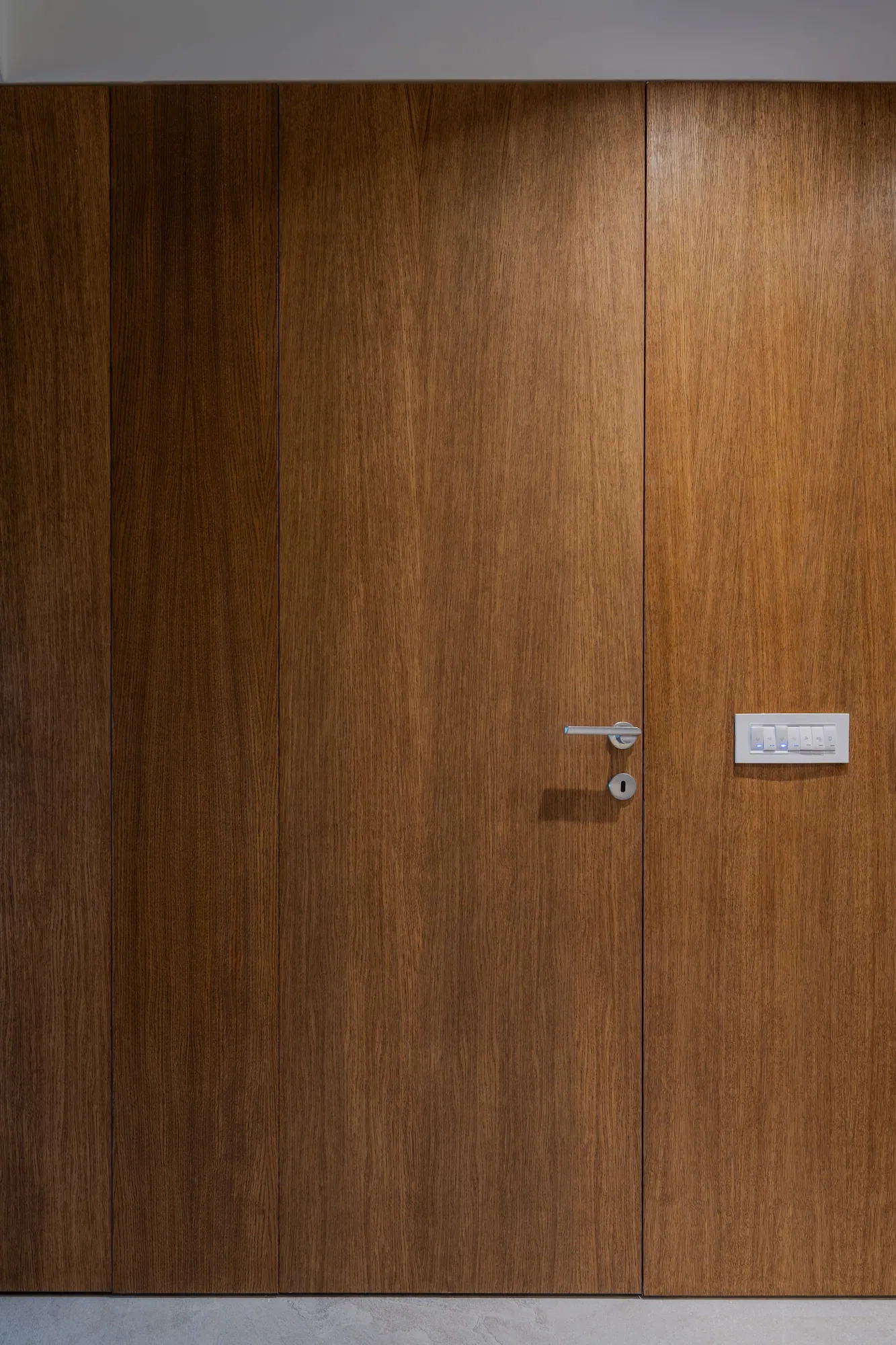
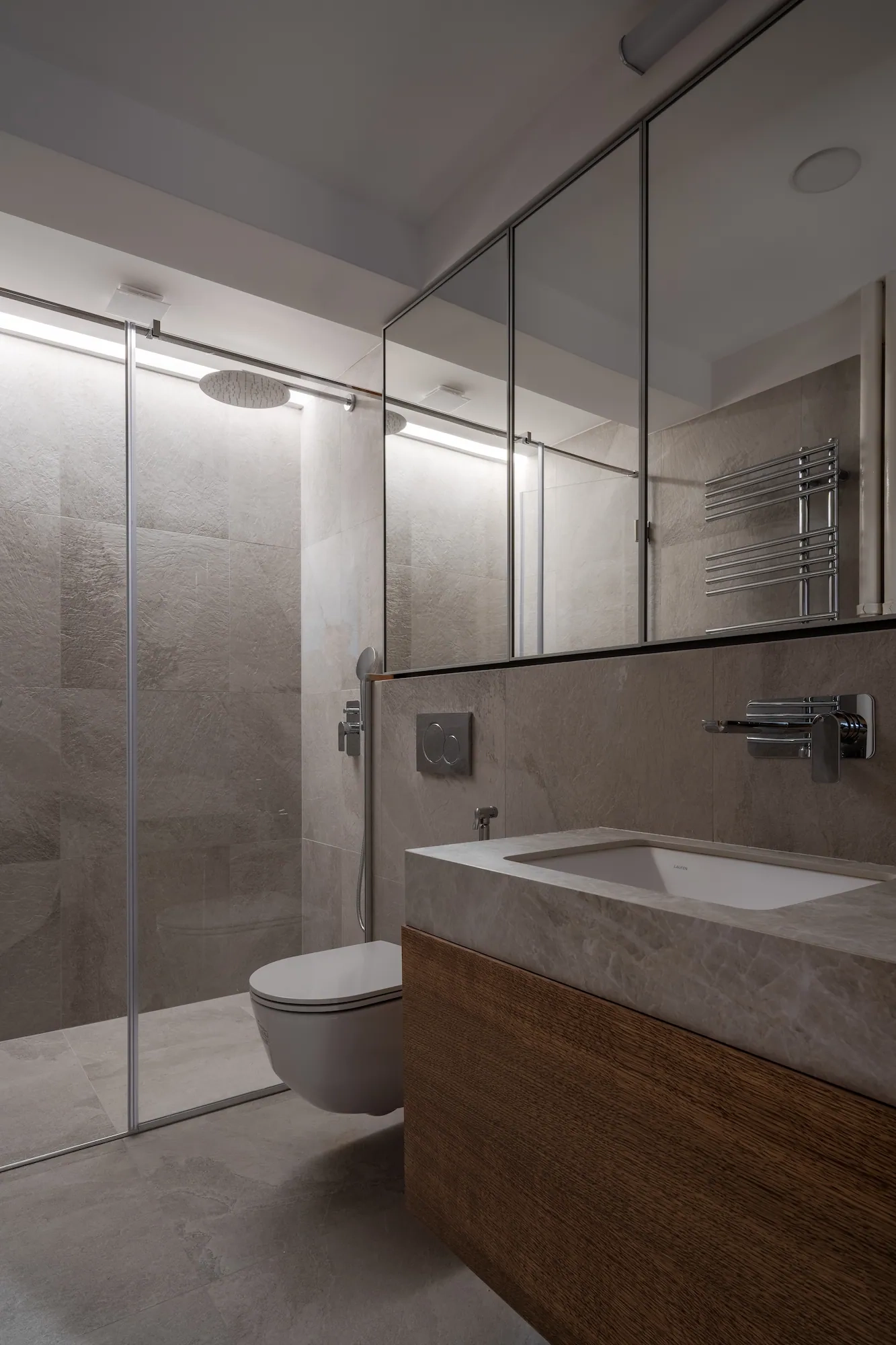
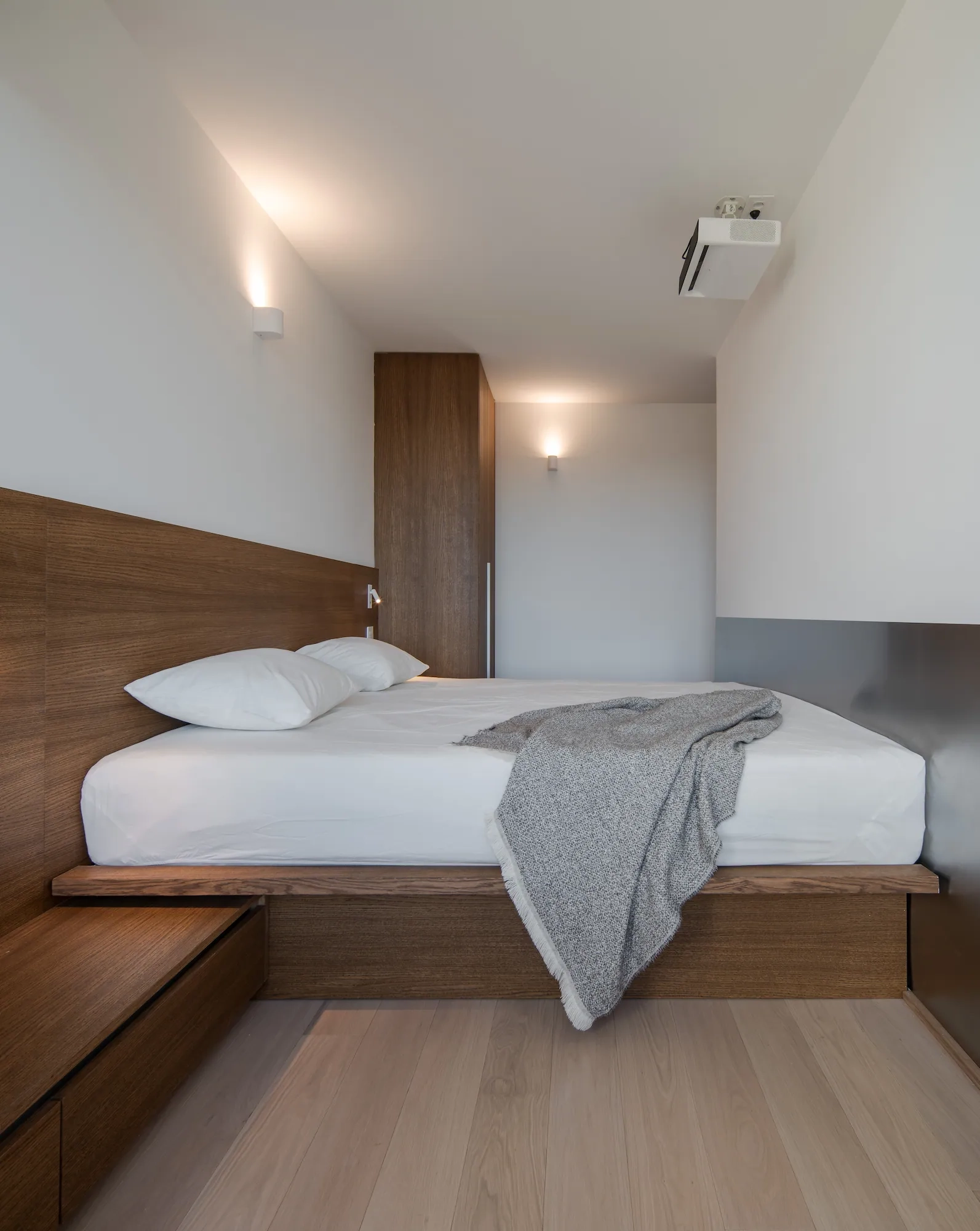
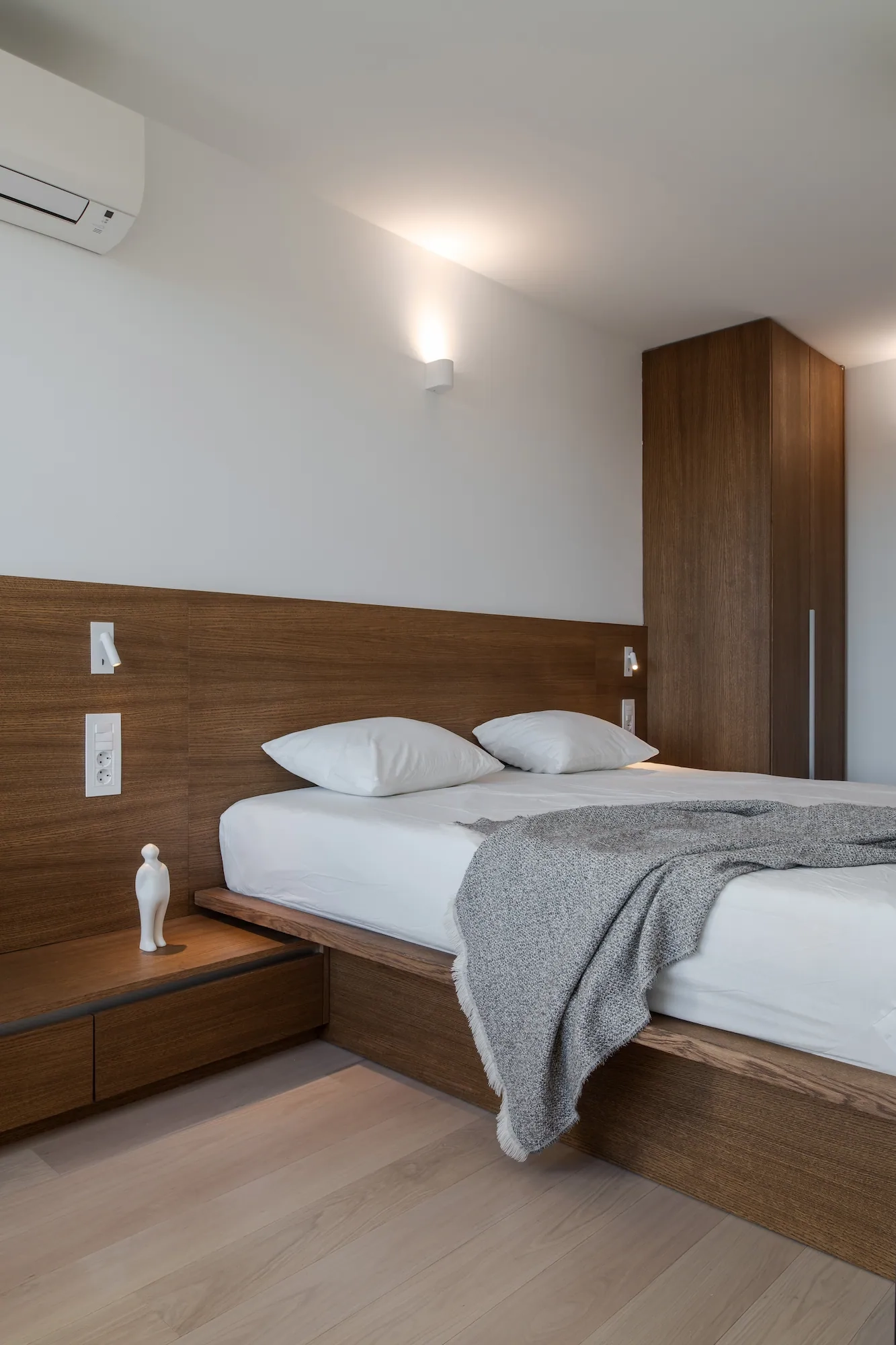
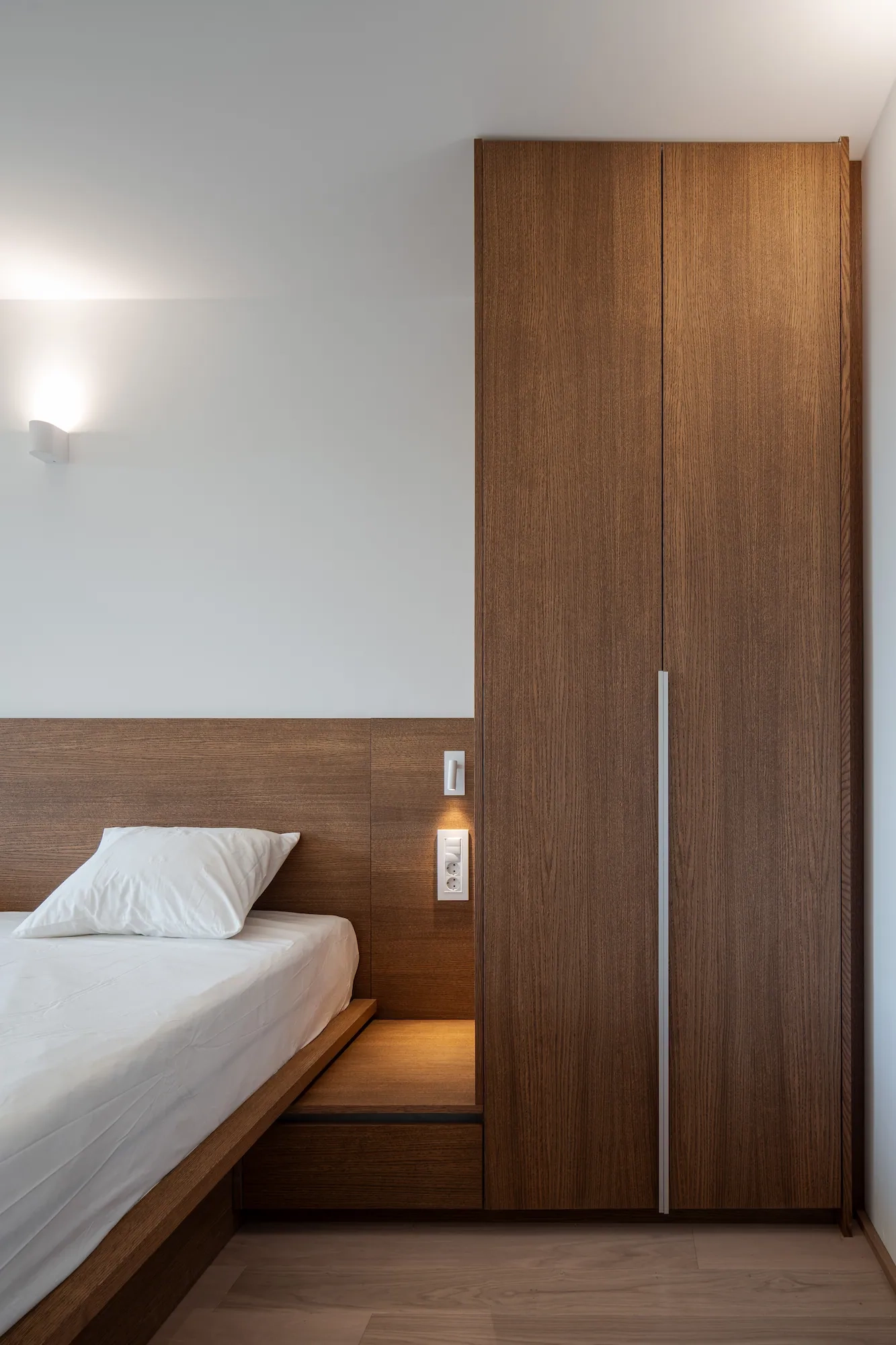
The architectural expression is restrained and quiet. Materiality celebrates the tactility and nobility of natural materials—wood, stone, textiles, and light-colored flooring—rather than decoration. Light is integrated into joints and surfaces, emphasizing spatial planes and depth. Freestanding furniture elements “float” through the space, articulated by function, movement, and efficiency rather than formal gestures. Functions are fluid and adaptable, suited to contemporary lifestyles without rigidly defined boundaries.
The solution directly responds to the client’s needs for a rational, calm, and adaptable home. The compact organization maximizes usable area, reduces material consumption, and prolongs the lifecycle of the space, confirming a responsible approach to resources.